

Achilles Tendinitis Treatment in Downtown Vancouver

Share page to:
Achilles tendinitis treatment at Vancouver Physiotherapy Hub, downtown Vancouver

Pain at the back of the heel that is stiff first thing in the morning, loosens off once you are warm, then comes back worse the next day — that is the pattern most people describe when they walk in with an Achilles problem. Left alone, it tends to settle just enough to let you train again, then flare right back.

Vancouver Physiotherapy Hub treats Achilles tendon pain at 970 Burrard Street, Suite 209, in the heart of downtown. Our physiotherapists work out what is overloading the tendon, settle the pain down, and rebuild the tendon’s capacity so it holds up when you go back to running, training, or a full day on your feet.

Book an Achilles assessment · 778-727-0810

At a glance

  • Common symptoms: morning stiffness at the back of the ankle; pain on the first few steps; soreness after running, hills or jumping; tenderness along the tendon; pain pushing off or climbing stairs
  • Who we see for this: runners, hikers, court and field sport athletes, gym-goers, dancers, and people whose work keeps them standing or walking all day
  • Often mistaken for: calf strain, plantar fasciitis, ankle sprain, heel bursitis
  • What you will leave with: a clear working diagnosis, a written home program, and specific guidance on what to do — and what to hold off on — this week
  • First visit: 45-minute initial assessment. No doctor’s referral needed to see a physiotherapist in BC.
  • Location and hours: 970 Burrard Street, Suite 209, Vancouver — physiotherapy available seven days a week, 8:00 AM to 8:00 PM

Achilles tendinitis, tendonitis, or tendinopathy — what is the difference?

People search all three spellings, and in everyday use they point at the same problem: a painful, overloaded Achilles tendon.

  • Achilles tendinitis / Achilles tendonitis — the two common spellings patients use. Both describe pain and irritation in the tendon.
  • Achilles tendinopathy — the term clinicians tend to use now, because persistent tendon pain usually reflects changes in the tendon’s structure and load tolerance rather than straightforward inflammation.

Where the pain sits matters more than which word you use:

  • Mid-portion — pain roughly 2 to 6 cm above the heel bone. The more common presentation.
  • Insertional — pain right where the tendon meets the heel bone. This one needs a different loading approach, particularly around stretched positions and footwear.

Your physiotherapist will work out which you have, because the rehab is not the same.

What causes Achilles tendinitis?

Nearly always a mismatch between what you asked the tendon to do and what it was ready for. The triggers we see most often downtown:

  • a jump in running volume, pace, or hill work — Seawall mileage climbing faster than the tendon can adapt
  • starting a new sport, or coming back to one after time off
  • an abrupt footwear change: into cleats, into minimal shoes, or out of heels into flats
  • a sudden increase in time on your feet at work
  • calf strength and endurance that has not kept up with training load
  • a previous Achilles or lower-limb injury

Physiotherapist

Physiotherapist

How we treat Achilles tendinitis

1. Settle the pain without shutting you down.
Complete rest is rarely the right answer for a tendon — it loses capacity while you wait, and flares again as soon as you return. We reduce the specific loads irritating it and keep you moving in ways it can tolerate.

2. Rebuild the tendon’s capacity.
This is the core of Achilles rehab and where the evidence is strongest. You get specific exercises with reps, sets, tempo and a written progression — not a generic handout.

3. Hands-on and adjunct treatment where it helps.
Manual therapy, IMS, acupuncture and low-level laser can help manage symptoms and calf tension alongside the loading program. These support the rehab; they do not replace it.

4. Footwear and orthotics where they are contributing.
What is on your feet changes how the tendon is loaded. Orthotics help in selected cases, usually where footwear or foot mechanics are adding to that load, and they work best alongside a strengthening program rather than instead of one. We assess and fit orthotics in-clinic.

5. Return to running or sport on a plan.
Progressions are based on how the tendon responds over the following 24 hours, not on how it feels in the moment. That single rule prevents most setbacks.

6. Keep it from coming back.
Before you finish care you will have a maintenance plan covering training load, footwear rotation, and the strength work worth keeping in your week.

Electra Health, a separate clinic in the same building at 970 Burrard Street, offers massage therapy, acupuncture, chiropractic and kinesiology, so if your recovery calls for one of those your physiotherapist can coordinate it here rather than sending you across town.

How long does Achilles tendinitis take to heal?

Tendons are slow, and we would rather tell you that at the start than have you stop at week three.

Most people find their pain becomes noticeably more predictable within the first few weeks — you stop being surprised by it. Rebuilding full load tolerance, so the tendon handles hills, speed work or a long day standing without complaint, generally takes months rather than weeks. Returning to full training before that capacity is rebuilt is the single most common reason symptoms come back.

Your physiotherapist will give you a realistic range at your first visit, based on how long you have had it and what you are returning to.

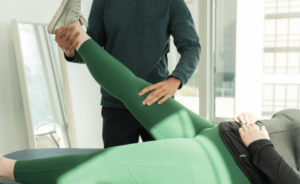
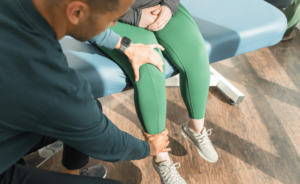
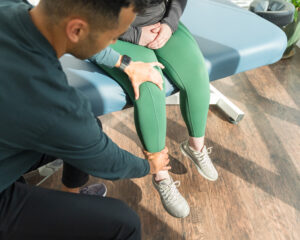
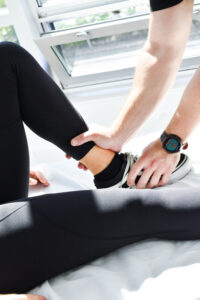
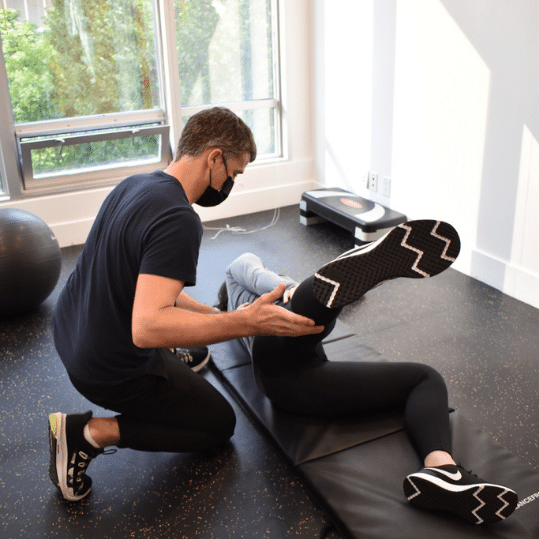
Physiotherapist performing manual therapy on a patient's Achilles tendon and calf

What happens at your first appointment

Your initial assessment runs 45 minutes.

Your physiotherapist will:

  • take a full history — recent training, footwear, work demands, previous injuries
  • pinpoint exactly where the pain sits: mid-portion or insertional
  • test calf strength and endurance and compare both sides
  • check how the tendon handles single-leg loading, heel raises, and hopping where that is appropriate
  • assess ankle mobility and movement control
  • rule out the conditions that mimic Achilles pain

You will leave the first session with a working diagnosis, hands-on treatment where it is indicated, and a written home program you actually know how to perform.

What to bring: your running or training shoes, the shoes you actually wear to work, and any insoles or orthotics you already use. What is on your feet changes how the tendon is loaded, and that is far easier to assess in person than to describe.

Conditions that feel like Achilles tendinitis

Calf strain — can feel similar: pain in the lower leg on push-off. Key difference: a strain usually follows one sudden movement and is felt in the muscle belly higher up, not at the tendon near the heel.

Plantar fasciitis — can feel similar: heel pain that is worst first thing in the morning. Key difference: plantar fasciitis is felt underneath the heel and along the arch; Achilles pain sits at the back of the heel and up the tendon.

Retrocalcaneal bursitis — can feel similar: pain at the back of the heel. Key difference: often aggravated by shoe pressure against the heel counter specifically.

Achilles tear or rupture — can feel similar: pain in the same region. Key difference: a rupture is sudden and sharp, often with an audible pop, and you typically cannot push off or stand on your toes. See the red flags below.

Heel bone stress injury — can feel similar: exercise-related heel pain. Key difference: bony rather than tendon pain, worse with impact loading, and may need imaging.

Not sure which one you have? That is what an ankle and foot assessment is for.

When Achilles pain needs urgent care

Most Achilles pain is not an emergency. Some things are.

Go to an emergency department now if you felt or heard a pop or snap at the back of your ankle, have sudden sharp pain, and cannot push off or stand on your toes. These are signs of a possible Achilles rupture.

Get same-day medical assessment if you have new one-sided calf swelling, warmth, redness or tenderness. If that comes with chest pain, shortness of breath, fainting or coughing blood, call 911.

Not sure where you fit? Call 8-1-1 (HealthLink BC). It is staffed 24/7 and a registered nurse can help you decide whether you need the emergency department, a walk-in, your family doctor, or physiotherapy.

Ongoing Achilles pain with none of the above — stiff in the morning, sore with loading, still walking — is what physiotherapy is for. You do not need a doctor’s referral to see a physiotherapist in BC.

Frequently Asked Questions

What are the signs of Achilles tendinitis?

Stiffness or pain at the back of the ankle that is worst in the morning or after sitting, soreness that builds during or after activity, tenderness when you press along the tendon, pain pushing off or climbing stairs, and sometimes mild swelling or thickening of the tendon itself.

Is Achilles tendinitis the same as Achilles tendinopathy?

In everyday use, yes. Tendinopathy is the term clinicians more often use for persistent, load-related tendon pain, because it usually reflects changes in the tendon’s structure and load tolerance rather than straightforward inflammation.

How do I tell Achilles tendinitis from plantar fasciitis?

Location. Achilles pain sits at the back of the heel and up the tendon. Plantar fasciitis is felt underneath the heel and along the arch of the foot. Both are worst in the morning, which is why they get confused.

Should I stop running?

Usually not entirely. Complete rest tends to let the tendon lose capacity, so symptoms return the moment you go back. Most people do better reducing volume, pace and hill work for a period while rebuilding strength, then progressing back deliberately. Your physiotherapist will give you specific limits.

What is the fastest way to heal Achilles tendinitis?

There is no shortcut, but there is a fastest realistic route: get an accurate diagnosis early, start progressive loading rather than waiting for the pain to disappear on its own, and return to full training only once capacity is rebuilt.

What is the difference between insertional and mid-portion Achilles tendinopathy?

Mid-portion pain sits roughly 2 to 6 cm above the heel bone. Insertional pain sits right at the attachment to the heel. The rehab differs, especially around stretched positions and footwear.

Do insoles or orthotics help?

They can, in selected cases — usually where footwear or foot mechanics are contributing to the load on the tendon. They work best alongside a strengthening program, not instead of one. We assess and fit orthotics in-clinic.

Can Achilles tendinitis turn into a rupture?

Tendinopathy and rupture are different problems, but a long-standing tendon issue should not be ignored. Sudden pain with a pop, weakness, and inability to push off needs urgent assessment — go to an emergency department.

Do I need a doctor’s referral?

No. In British Columbia you can book a physiotherapist directly, without a referral. Some extended health plans ask for a referral before they will reimburse, so it is worth checking your own policy.

Do you direct bill?

Yes. We direct bill most major extended health insurers, and we handle ICBC and WorkSafeBC claims. See direct billing for the full picture.

Book an Achilles assessment

Vancouver Physiotherapy Hub
970 Burrard Street, Suite 209, Vancouver, BC V6Z 2R4
778-727-0810
Physiotherapy available seven days a week, 8:00 AM to 8:00 PM

Call to Book · 778-727-0810

First visit: 45-minute initial assessment, $150. A 60-minute initial assessment is $175. No doctor’s referral needed to see a physiotherapist in BC. See full physiotherapy pricing.

Billing: we direct bill most major extended health insurers. See direct billing, or go straight to extended health, ICBC or WorkSafeBC.

Getting here

We are in Suite 209, second floor of the Electra Building, on the NE corner of Burrard and Nelson — directly across from the YMCA. The only entrance is on Burrard Street, and there is elevator access throughout the building.

SkyTrain: Expo Line to Burrard or Granville station. From Burrard, walk south on Burrard. From Granville, walk south on Granville, west on Smithe, then south on Burrard. On the Canada Line, exit at Vancouver City Centre, left on W Georgia, then left on Burrard.

Parking: metered street parking is available around the clinic — note the restrictions, no parking 7 to 9 am or 3 to 6 pm. Underground pay parking is available beneath the Scotiabank Theatre at 900 Burrard, or at the IGA across the street.

Cycling: bike racks are directly outside the doors.

Related: running injuries · ankle pain · our physiotherapists · contact us

Related Resources

Pelvic floor physiotherapy for men at Vancouver Physiotherapy Hub

Your Pelvic Floor, The Unsung Hero of the Body

Welcome to Vancouver Physiotherapy Hub, your trusted partner in health and wellness located in the heart of downtown Vancouver. Our team of experienced pelvic floor physiotherapists is dedicated to helping you achieve optimal health through personalized care and specialized treatments.
What Our Clients Say About Us

Google Reviews

I saw Maria for a sports injury. She is a true professional and is exceptional at her craft. I am so grateful that I have been able to return to my training regimen with her guidance.

JD E. · Google review

Amazing service, very knowledgeable and attentive. Highly recommended

Mali M. · Google review

Read more reviews on Google

Ready to get started?

Our team is available to talk you through our services, answer your questions and find the right treatment for you! Book an appointment or drop us a line and get in touch.